

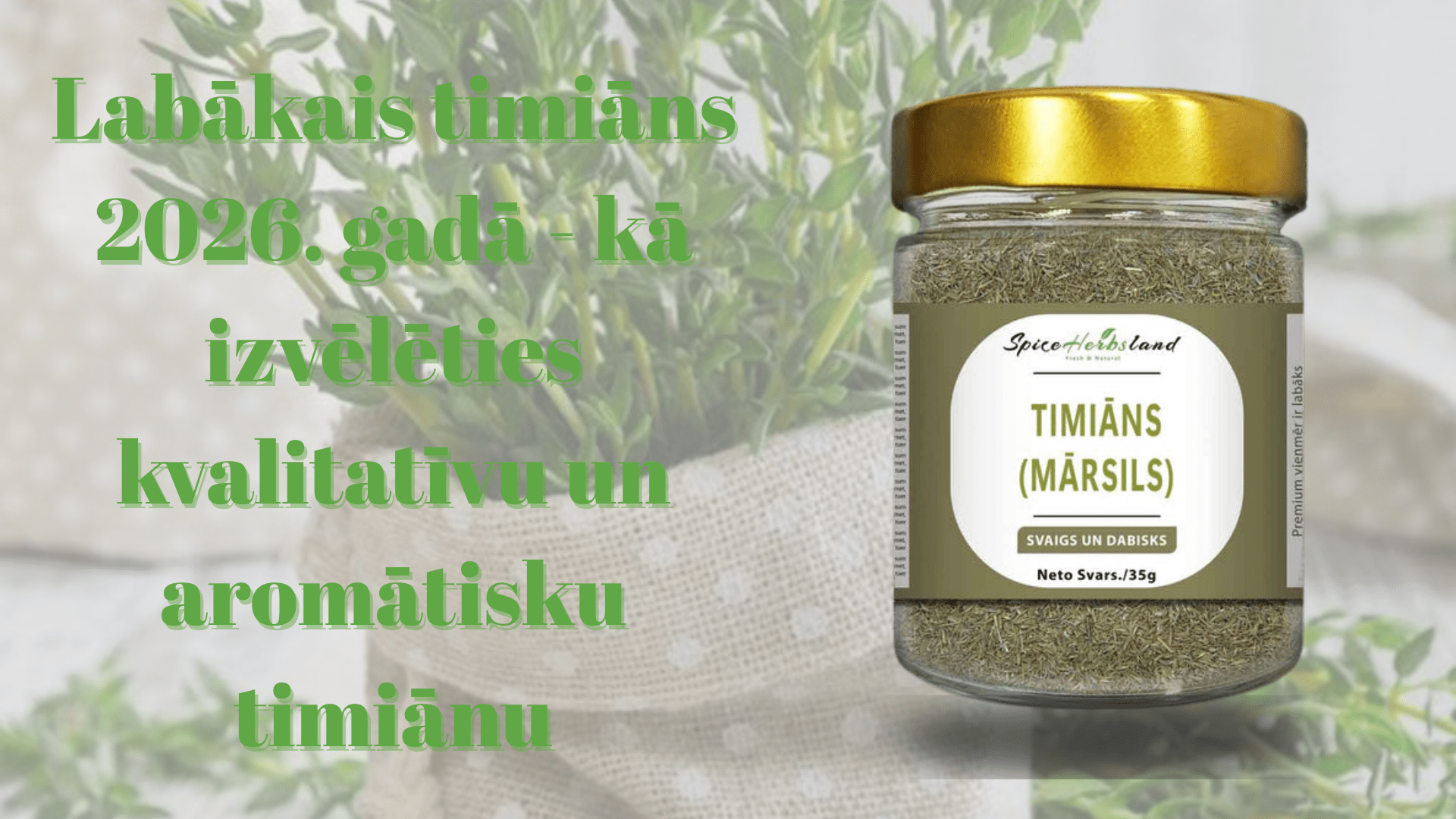
Best Thyme in 2026 - How to Choose Quality and Aromatic Thyme
Thyme has maintained its place in both the kitchen and home garden for decades. It is not just an aromatic herb, but also a plant with character, an intense aroma, rich taste, and wide application.
It's no wonder that in 2026, many are still looking for an answer to one specific question: which is the best thyme and how to choose truly high-quality and aromatic thyme that meets expectations.
In recent years, thyme selection habits have changed. While previously the main criteria were price or availability, in 2026, more and more attention is being paid to the variety, aroma intensity, origin, and whether the thyme is suitable for a specific purpose.
People compare thyme varieties, inquire about winter-hardy thyme for Latvian conditions, and also want to know whether to choose fresh or dried thyme for daily use.
This article will help you understand how to choose the best thyme in 2026, whether you are looking for thyme for cooking, wellness and teas, or for growing in the garden or pots. Step-by-step, we will look at what determines the quality of thyme, which varieties are most valuable, and how to make a thoughtful choice without unnecessary guessing.
1. What is thyme and why is quality important

1.1 What is thyme
Thyme is an aromatic herb from the Mediterranean region, widely used in both cooking and everyday wellness. It belongs to the Thymus family and is known for its strong aroma and warm, slightly spicy taste. The most common is common thyme (Thymus vulgaris), but other thyme varieties with different flavor nuances are also available. Thyme is used fresh and dried, added to soups, meat dishes, teas, and marinades. Its versatile use makes thyme one of the most popular herbs in 2026 as well.
Nutritional value (100 g of thyme):
Energy value: 101 calories
1.2 Why quality is important
When choosing thyme, quality is crucial, as it directly affects both taste, aroma, and the overall user experience.
- High-quality thyme contains more essential oils.
- The aroma is more pronounced and long-lasting.
- The taste is richer and balanced.
- Thyme retains its properties even after drying.
- Low-quality thyme often lacks scent and effectiveness.
Quality precisely determines whether thyme will be just an additive or a truly outstanding herb.
2. How to recognize quality and aromatic thyme

To choose truly the best thyme in 2026, it is important to pay attention to details. Quality can be determined at first glance if you know what to look for and what to sense.
-
Thyme color as an indicator of quality: Quality thyme has a uniform, naturally green color. Faded, grayish, or brownish leaves usually indicate an old or improperly stored product.
-
Smell - the first signal of aroma: A strong, warm, and slightly spicy aroma is a sign of good thyme. If the thyme hardly smells, it has likely lost its value.
-
Leaf structure and firmness: Leaves should not be too brittle or crumbled into dust. Quality thyme leaves are firm and retain their shape well.
-
Amount of essential oils: Essential oils determine the intensity and effect of thyme's aroma. The richer the oil content, the less quantity is needed for use.
-
How low-quality thyme manifests itself: Low-quality thyme is characterized by a dull color, weak smell, and flat taste. It often contains many stems and small crumbs.
-
What this means in practical use: Low-quality thyme cannot give a deep taste to food and requires a larger quantity. Quality thyme, on the other hand, is aromatic, economical, and more pleasant to use.
3. Best thyme varieties in 2026
When choosing the best thyme in 2026, the variety plays a crucial role. Each thyme variety offers a different aroma, taste intensity, and application, so the right choice helps achieve the best results both in the kitchen and in the garden.
3.1 Common Thyme (Thymus vulgaris)
Common thyme is the most popular and versatile choice for cooking. It has a stable, balanced aroma and a distinct flavor that pairs well with meats, vegetables, soups, and sauces. This variety is ideal for those looking for a safe and versatile thyme for everyday use.
3.2 Lemon Thyme
Lemon thyme stands out with a delicate, fresh citrus aroma. It is especially suitable for fish dishes, salads, and tea. This variety adds lightness and freshness, so it is often chosen by those who prefer milder flavor notes.

3.3 Wild Thyme
Wild thyme is known for its intense aroma and strong taste. In addition to its culinary use, it is also an ornamental plant that fits well in a natural environment. This variety is often used for teas and aromatic blends.
3.4 Winter-Hardy Thyme for Latvian Conditions
Winter-hardy thyme is robust and easy to care for, making it an excellent choice for the Latvian climate. It can overwinter without much difficulty and provides a stable yield for several years. This variety is suitable for long-term cultivation both in the garden and in pots.

3.5 Bushy Thyme
Bushy thyme forms a denser structure and is especially suitable for regular harvesting. It has a pronounced aroma and retains its shape well after pruning. This variety is popular in both cooking and ornamental plantings.
3.6 Creeping Thyme
Creeping thyme is a low-growing variety often used as ground cover. It has a pleasant aroma and decorative blooms. Although its taste is milder, it perfectly complements teas and natural herbal blends.

3.7 Silver Thyme
Silver thyme is distinguished by its leaves, which have a light, silvery hue. It combines an ornamental appearance with a pleasant aroma, making it an interesting choice for both the garden and light culinary uses.
The diversity of these varieties allows everyone to find the best thyme in 2026, considering both taste preferences and growing possibilities.
4. Which thyme to choose according to purpose
The table below helps to quickly and clearly understand which thyme to choose depending on the purpose. It summarizes the most popular thyme varieties and their suitability for cooking, wellness, cultivation, and ornamental use.
|
Purpose |
Recommended Thyme |
Why it is suitable |
|
For cooking |
Common Thyme (Thymus vulgaris) |
Stable aroma and balanced taste. Complements meat, vegetables, soups, and sauces well. Suitable for everyday use in the kitchen. |
|
For tea and wellness |
Lemon thyme, wild thyme |
Milder aroma and pleasant smell. Well suited for warm teas and relaxation rituals. |
|
For growing in the garden or pots |
Winter-hardy thyme |
Durable, easy to care for, and adapts well to the Latvian climate. Provides a stable yield long-term. |
|
For ornamental purposes |
Creeping thyme, silver thyme |
Attractive appearance, decorative blooms, and pleasant aroma. Complements garden or terrace design well. |
By choosing thyme according to a specific purpose, it is easier to find the best thyme in 2026 that meets both taste preferences and practical needs. The right choice ensures better taste, aroma, and long-term user experience.
5. Fresh or dried thyme - which is better in 2026

Fresh thyme stands out with a brighter, livelier aroma and a milder flavor nuance. It is ideal for dishes where freshness is important, such as vegetable stews, fish, or light sauces. The flavor intensity is fresh and clean, but fresh thyme quickly loses quality and requires proper storage in the refrigerator or a pot.
Dried thyme, on the other hand, is more concentrated and convenient for everyday use. It lasts longer, takes up little space, and is easy to portion. Dried thyme is more suitable for soups, meat dishes, and long cooking times. In 2026, the best choice is not one option, but the right thyme for a specific purpose.
6. Where to buy the best thyme in 2026

The best thyme in 2026 can be found in specialized spice and organic product stores, as well as from local growers and markets in Latvia. Here, fresh, aromatic thyme with a known origin is often available.
Online stores with quality certifications, offering convenient ordering from home, are becoming increasingly popular. When buying thyme online, it is important to pay attention to the product description, origin, and storage information.
Spice Herbs Land offers carefully selected high-quality thyme, suitable for both cooking and tea. Our range also includes oregano, rosemary, saffron, sesame seeds and lemongrass.
To avoid low-quality products, choose reliable vendors, avoid excessively low prices, and prefer brands that specialize in spices and natural products.
7. Common mistakes when choosing thyme
When choosing thyme, many pay attention only to the price or appearance, but it is precisely the small details that determine whether the product will be truly aromatic and of high quality. Below are the most common mistakes to avoid.
- Choosing based only on the lowest price, not quality.
- Not checking the aroma before purchase.
- Choosing the wrong thyme variety for a specific purpose.
- Buying old or improperly stored thyme.
- Trusting unverified sellers without information about the origin.
- Too many stems and dust in the product.
By avoiding these mistakes, it is much easier to find the best thyme in 2026 that provides a rich aroma, good taste, and pleasant user experience.
8. Frequently Asked Questions about Thyme (FAQ)
Which thyme is the most potent in terms of aroma?
Common thyme (Thymus vulgaris) and wild thyme usually have the most intense aroma. These varieties contain a high amount of essential oils, providing a strong, lasting scent and distinct flavor.
Can thyme be used daily?
Yes, thyme can be used daily in moderation. It is suitable for both cooking and tea. It's important to choose good quality thyme and not to overdo the dosage.
How to properly store thyme?
Fresh thyme should be stored in the refrigerator or in a pot, while dried thyme should be kept in a dry, dark place in an airtight container. Proper storage helps preserve the aroma.
Does thyme grow in the Latvian climate?
Yes, many thyme varieties are suitable for the Latvian climate. Winter-hardy thyme, in particular, grows well, able to overwinter and yield crops for several years.
How do thyme varieties differ in taste?
Thyme varieties differ in aroma intensity and flavor nuances. Common thyme is stronger, lemon thyme offers a fresh citrusy note, while wild thyme is distinctly aromatic and slightly spicy.
9. Conclusion
When choosing the best thyme in 2026, the most important thing is to understand your goal and pay attention to quality. In this article, we discussed how thyme varieties differ, why aroma and origin are crucial, and when it's better to choose fresh or dried thyme. Properly chosen thyme always provides a richer flavor, more pleasant aroma, and a better user experience.
If you are buying thyme for the first time, start with common or lemon thyme from a reputable seller. Choose a product with a distinct aroma and clear origin, rather than relying solely on price. A small amount of high-quality thyme will always yield better results than a cheap and weak product.
Visit Spice Herbs Land, where you will find carefully selected thyme, as well as other spices and herbs. Order online and feel the difference from the very first use.


