

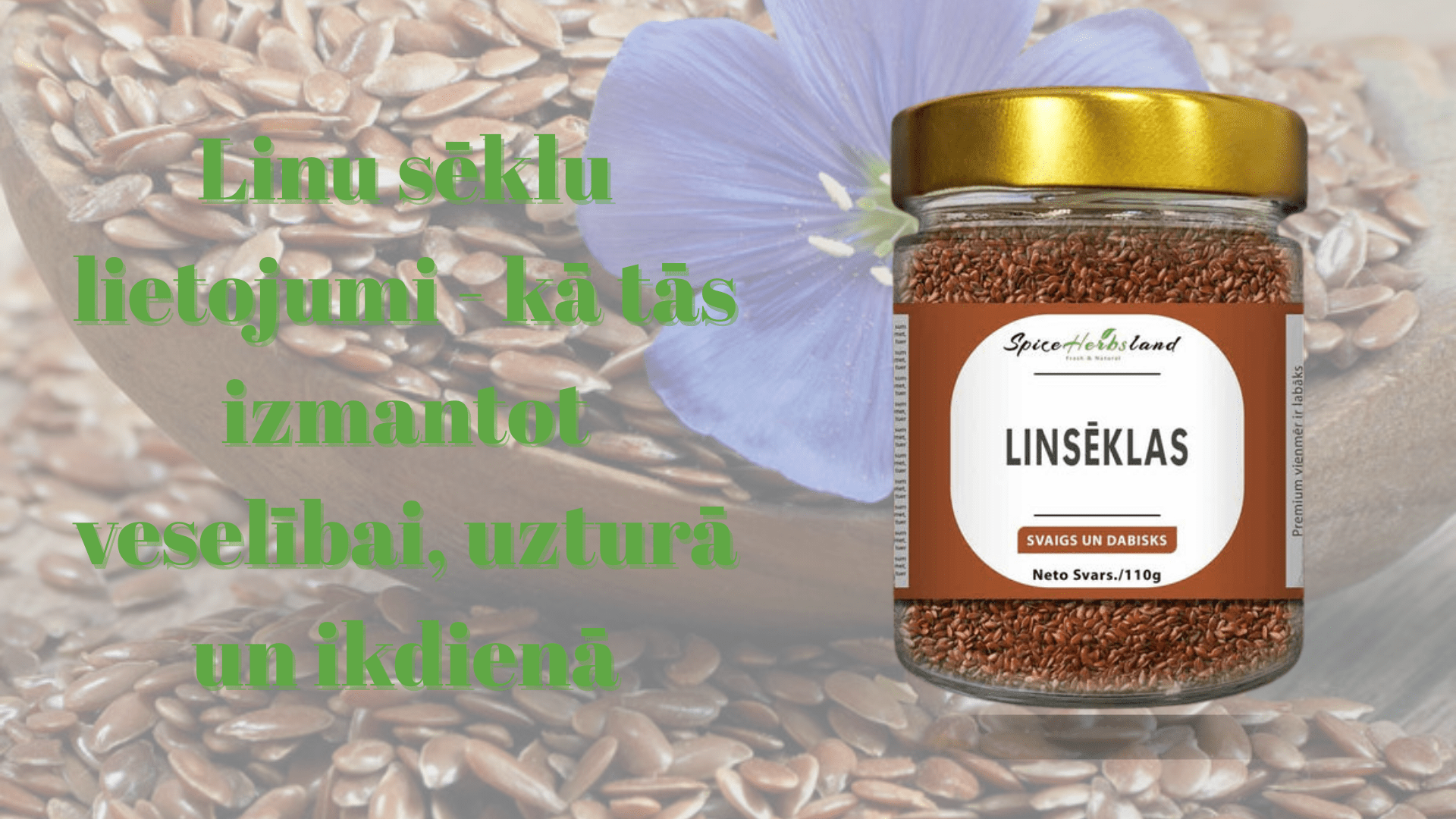
Uses of Flaxseed - How to Use Them for Health, Nutrition, and Everyday Life
Flaxseeds have become an indispensable part of a healthy diet in recent years, and this is no coincidence. These small seeds are rich in fiber, omega-3 fatty acids, and other valuable nutrients that support the body's daily needs. That's why more and more people are interested in the uses of flaxseed and practical ways to easily incorporate them into their daily lives.
Flaxseeds are widely used to improve digestion, support heart health, manage weight, and maintain a balanced diet. They can be added to breakfast, smoothies, salads, or used in baking. However, questions often arise – how to use flaxseed correctly, whether to choose ground or whole, and how much is enough daily.
In this article, you will find practical and understandable tips on using flaxseed for health, nutrition, and daily habits. We focus on real solutions, not theory. If you are looking for reliable quality, Spice Herbs Land offers premium quality flaxseeds for those who want to get the maximum benefit from this natural product.
1. What are flaxseeds and why are they valuable?

Flaxseeds are a natural seed product with a long history, used by people for both nutrition and health promotion. They are obtained from the flax plant, seeds, thanks to their high nutritional value and wide range of uses, especially among adherents of a healthy lifestyle.
1.1 Origin and Types of Flaxseed
The most common types are two types of flaxseed, brown and golden flaxseed. Brown flaxseeds are more common and have a slightly more pronounced flavor, while golden ones are milder and visually lighter. In terms of nutritional value, the differences are minimal, so the choice is mainly based on personal taste and application in the diet.
1.2 Nutritional Value of Flaxseed
Flaxseeds are a nutrient-rich product with high energy value. 100 grams of flaxseed contain approximately 534 calories, which corresponds to about 55 calories per tablespoon (10 grams) of whole seeds. They mainly consist of fats, carbohydrates, and proteins, making flaxseeds a valuable addition to a balanced diet.
According to nutrient distribution, flaxseeds contain about 42% fat, 29% carbohydrates, and 18% protein. Most of the fat consists of healthy omega-3 fatty acids, while carbohydrates mainly come from fiber, which positively affects digestion.
One tablespoon (10 g) of whole flaxseeds contains:
- Energy value: 55 kcal
- Water: 7 %
- Proteins: 1.9 g
- Carbohydrates: 3 g
- Sugar: 0.2 g
- Fiber: 2.8 g
- Fats: 4.3 g
This nutrient balance makes flaxseeds particularly suitable for both daily nutrition and supporting a healthy lifestyle. This nutrient balance makes flaxseeds particularly suitable for daily use. They are often used together with chia seeds, hemp seeds, sesame seeds, or pumpkin seeds to increase fiber, healthy fat, and mineral intake, creating a diverse and nutrient-rich diet.
2. Flaxseed Uses for Health

Flaxseeds have long been used as a natural health aid, and their effects are not just based on folk experience. Thanks to their high fiber, omega-3 fatty acid, and bioactive substance content, flaxseed uses for health cover several important bodily functions, from digestion to heart and metabolic support.
2.1 Flaxseed for the Digestive System
One of the best-known uses of flaxseed is improving digestion. Fiber helps soften bowel contents and promotes regular bowel movements, so flaxseeds are often used to relieve constipation. They also support gut microflora and help maintain a healthy digestive rhythm.
For maximum effect, flaxseeds should be consumed with sufficient water. Fiber absorbs fluid, so a lack of water can have the opposite effect. Practically, ground or soaked flaxseeds with a glass of water is a simple and safe daily solution.
2.2 Flaxseed Uses for Heart Health
Flaxseeds are valuable for the heart mainly due to their omega-3 fatty acids. They help maintain cholesterol balance, especially by reducing "bad" LDL cholesterol levels. Regular use can also favorably affect blood vessel elasticity and the overall function of the cardiovascular system.
In the long term, incorporating flaxseeds into your diet can become a simple habit that supports heart health without drastic dietary changes. Even small but regular doses provide benefits if used consistently.
2.3 Flaxseed for Weight Management
Flaxseeds are often used for weight management because they promote a prolonged feeling of fullness. Fiber slows down digestion, reduces cravings for snacks, and helps control portion sizes. At the same time, they provide the body with necessary nutrients, not empty calories.
Flaxseeds also support metabolism, especially when consumed in the morning or before meals. For weight loss, ground or soaked flaxseeds are most often chosen, as they are easier to digest and more effectively absorbed.
2.4 Flaxseed Uses for Blood Sugar Balance
Thanks to their high fiber content, flaxseed uses for blood sugar balance are particularly relevant for people who want to avoid rapid blood sugar fluctuations. Fiber slows down carbohydrate absorption and helps maintain a more even glucose level.
As a result, it is possible to maintain more stable energy throughout the day, avoiding sudden fatigue or sugar cravings. Adding flaxseeds to breakfast or lunch is a simple way to achieve this effect daily.
3. Flaxseed Uses in Diet

Flaxseeds are easily adaptable to daily meals and do not require complex preparation. They can be used as a nutrient supplement or as a functional ingredient in various dishes. Below are the most practical and popular uses of flaxseed in the diet.
3.1 How to Use Flaxseed Correctly in Your Diet
Correct usage determines how much benefit the body actually receives from flaxseeds.
- Ground or whole flaxseeds: ground flaxseeds are absorbed better and are easier to digest.
- Soaked flaxseeds: recommended for digestive support and constipation relief.
- How much to consume per day: a safe dose is usually 1–2 tablespoons per day.
- The importance of water: when consuming flaxseeds, it is important to drink enough fluids.
Moderation and the correct form are key for flaxseed uses in the diet to be effective.
3.2 Most Popular Flaxseed Uses in Dishes
Flaxseeds can be added to everyday dishes without changing their taste, but improving their nutritional value.
- In porridges and breakfasts: in oatmeal, muesli, or porridge.
- In smoothies and yogurt: adds a thicker consistency and increases satiety.
- In salads and soups: as an additional fiber source without flavor changes.
- In baking and bread: in breads, pancakes, and pastries.
These flaxseed uses make it effortless to make daily meals more valuable.
3.3 Flaxseed in Vegetarian and Vegan Diets
In plant-based diets, flaxseeds are particularly important for nutrient balance.
- Source of fiber: helps maintain digestive balance.
- Healthy fats: omega-3 fatty acids in plant-based diets.
- Flax "egg": ground flaxseeds with water as an egg substitute in baking.
- Suitable for allergies: an alternative for people with egg intolerance.
In vegetarian and vegan diets, flaxseed uses offer both practical and nutritional benefits.
Flaxseed uses in the diet are simple, diverse, and easily adaptable to any lifestyle. Even small changes in your daily diet can provide significant benefits for your health and well-being.
4. Flaxseed Uses in Daily Life
Flaxseeds are not only for special dishes or specific health situations. They can become a simple daily habit that provides significant long-term benefits to the body. It is often the daily uses of flaxseed that are underestimated, although they require neither complex preparation nor significant dietary changes.
4.1 Flaxseed for Daily Well-being
Regular use of flaxseeds in small doses helps maintain stable digestion, energy levels, and overall well-being. One tablespoon a day is enough for the body to receive the necessary fiber and healthy fatty acids without overloading it. This approach is particularly suitable for those who want to maintain health preventively, rather than solve existing problems.
Flaxseeds can be incorporated into daily life without complications – by adding them to breakfast, yogurt, porridge, or even a glass of water. They do not require special preparation and fit well into various eating habits. The most important thing is regularity, not a large dose at once.
4.2 Flaxseed Use for Different Age Groups
-
For adults: flaxseeds are a valuable daily supplement that supports digestion, heart health, and metabolism. Regular use helps maintain a balanced diet, especially if there is a lack of fiber in the daily diet.
-
For seniors: flaxseed use can be beneficial for improving bowel function and maintaining a sense of comfort. In this age group, it is especially important to use ground or soaked flaxseeds and ensure sufficient fluid intake.
However, there are situations where caution is needed. People with sensitive digestive systems, chronic conditions, or those taking medication should consult a specialist before regular flaxseed use. Moderation and an individual approach are always the safest solution.
5. Flaxseeds or Flaxseed Oil – What to Choose?

The choice between flaxseeds or flaxseed oil often causes confusion. Both products provide similar benefits but differ in composition. The main thing is to understand the purpose for which they are used daily.
Flaxseeds contain fiber and healthy fatty acids. They support digestion and promote a feeling of fullness. This solution is suitable for those who want a natural source of fiber in their daily diet.
Flaxseed oil, especially cold-pressed, on the other hand, is a concentrated source of omega-3. It does not contain fiber but provides quick nutrient supplementation. If fiber is not a priority, an alternative could be hemp seed oil or pumpkin seed oil.
Daily use often includes walnut oil as well. All cold-pressed oils are recommended for cold use, such as in salads, to preserve their nutritional value.
6. Flaxseed Side Effects and Safe Use
Flaxseeds are generally safe to use, but like any natural product, they have their own conditions of use. For flaxseed uses to provide benefits, it is important to observe moderation and correct usage.
6.1 Who should be careful
Too much fiber in the diet can cause discomfort – bloating, a feeling of heaviness, or pain. This is especially true for people who have not previously consumed fiber-rich products regularly.
Possible drug interactions should also be considered. Flaxseeds can affect the absorption of certain medications, so if medications are being used, it is advisable to observe a time interval or consult a specialist.
6.2 Most common mistakes
-
Using flaxseeds without sufficient water: Fiber absorbs fluid, and lack of water can cause discomfort or constipation.
-
Incorrect storage: Ground flax seeds are kept in a warm or bright place, which promotes their spoilage and loss of nutritional value.
-
Too large a dose at once: Excessive use can cause bloating and a feeling of heaviness.
-
Sudden introduction of flax seeds in large quantities: The body needs time to get used to high fiber content.
-
Using whole flax seeds without grinding: In this way, nutrients are not fully absorbed.
-
Long-term storage after grinding: Ground flax seeds are used even after they have lost their freshness and quality.
7. How to store flax seeds to maintain quality

Proper storage helps preserve the nutritional value, taste, and freshness of flax seeds for longer. Even small storage errors can affect quality and effectiveness.
-
Whole flax seeds: Store in a dry, cool, and dark place. A tightly sealed glass or metal container is best. It is important to protect the seeds from moisture and direct sunlight.
-
Ground flax seeds: Store in the refrigerator in an airtight container, as they spoil faster. It is recommended to use them relatively quickly. If a bitter smell or taste appears, the product should no longer be consumed.
-
Flaxseed oil: After opening, store in the refrigerator. Use only cold, do not add to hot dishes. The bottle should always be tightly sealed to maintain nutritional value.
Proper storage ensures that daily use of flax seeds provides maximum benefits.
8. Conclusion
Flax seeds are a simple but very versatile product with wide applications for health, nutrition, and daily life. They support digestion, heart health, weight control, and help maintain a balanced diet without complicated solutions.
If you are just starting to explore the uses of flax seeds, start with a small dose and choose ground or soaked seeds. The key is regularity, not quantity.
To get the maximum benefit, always choose high-quality and fresh flax seeds. Spice Herbs Land offers premium quality flax seeds, as well as other natural seed and oil products for a healthy diet.


